
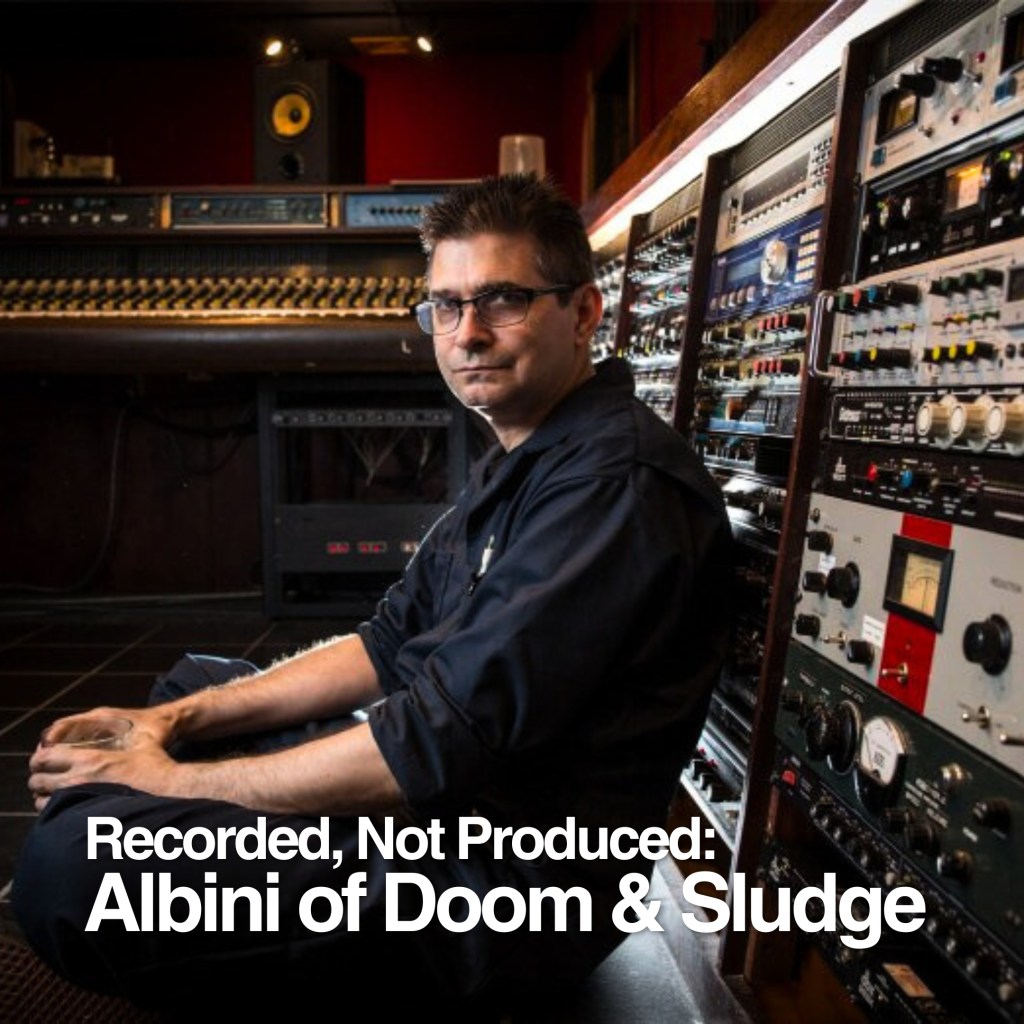
Steve Albini is famous for his work with punk and noise rock bands, which is deserved. Albums like In Utero, Surfer Rosa, and Goat transformed loud music. However, his influence is also present in the slower, heavier, darker side of music. Stoner, doom, sludge — he worked with them just like he did with punks. There was no polish. He had no producer ego. He avoided digital garbage. Just genuine room sound, analog gear, and mics placed like they actually matter.
Albini didn’t believe in “producing” bands. He believed in getting out of the way. “I’m not your guru,” he said more than once. “I’m here to document what you’re doing, not tell you how to do it better.” This mindset was what many humble, craftsmanship-oriented, relentlessly principled heavy metal bands sought.
Killdozer – God Hears Pleas of the Innocent
One of the earliest sludge records Albini touched after Big Black and Rapeman had wound down. Killdozer’s brand of mean, Midwestern noise needed no sweetening, and Albini understood that better than anyone. The band described working with him as focusing on the task at hand, with no small talk, just music equipment and a very loud environment. It sounds like you’re standing next to the amp when you play it. That’s the point.
High on Fire – Blessed Black Wings
Matt Pike’s first true classic post-Sleep. Recorded at Electrical Audio, and you can tell. The drums don’t just sit in the mix; actually, they threaten to crawl out of the speakers. Pike once said Albini didn’t sugarcoat anything: “He just sets up, hits record, and says, ‘Go.’” That urgency is all over Blessed Black Wings. Albini liked Pike’s vocals just the way they were — rough, buried, unapologetic. The record ends up feeling like a live show that might fall apart at any second but doesn’t.
Weedeater – God Luck and Good Speed
A swamp-blasted classic. Albini caught Weedeater in peak form and wisely did almost nothing to interfere. Dave “Dixie” Collins said the session was fast and brutally efficient: “Steve just lets the filth be filth.” The low end on this record could break ribs. It’s the sound of a band that knows exactly how disgusting they are, and a guy in the control room who knows better than to clean them up.
OM – God Is Good
Where most engineers would layer, tweak, or try to make things “bigger,” Albini left OM’s hypnotic repetition completely intact. Al Cisneros said working with Albini felt more like a field recording than a studio session. “He listens deeply,” Al said. “Doesn’t interrupt.” The space between notes is preserved, the air in the room becomes part of the song. It’s a quiet record, but it hits heavy.
Neurosis – Honor Found in Decay
Neurosis had already worked with Albini for years by the time this one came out. Their relationship was built on trust; the kind where you don’t have to explain yourself. Steve Von Till said Albini’s whole deal was to “remove the filter between us and the listener.” The record sounds massive without ever getting muddy. There’s clarity, but also decay. It breathes.
Sunn O))) – Life Metal & Pyroclasts
A collaboration that felt overdue. Sunn O))) brought Albini in specifically for his ability to record at terrifying volume without letting the signal collapse into mush. Stephen O’Malley described how Albini’s technique infused their drones with an intense weight; it’s not just a sound you hear, but a profound sensation that resonates on your skin. Albini, characteristically, said he tried to disappear during the sessions: “I just wanted the gear to do its job and not fuck it up.”
Steve Albini never pretended to understand mysticism or sludge or drone. But he understood how to mic a kick drum. He understood not to touch the guitar tone. And he understood that sometimes the most important thing an engineer can do is shut the hell up and let the amps breathe.
📸Brian Cassella / Chicago Tribune via Getty Images
