
Italian music is a journey through emotions, stories, and traditions that represent the country’s soul. From sad ballads to joyful tunes and even punk anthems, Italian music has something for everyone.
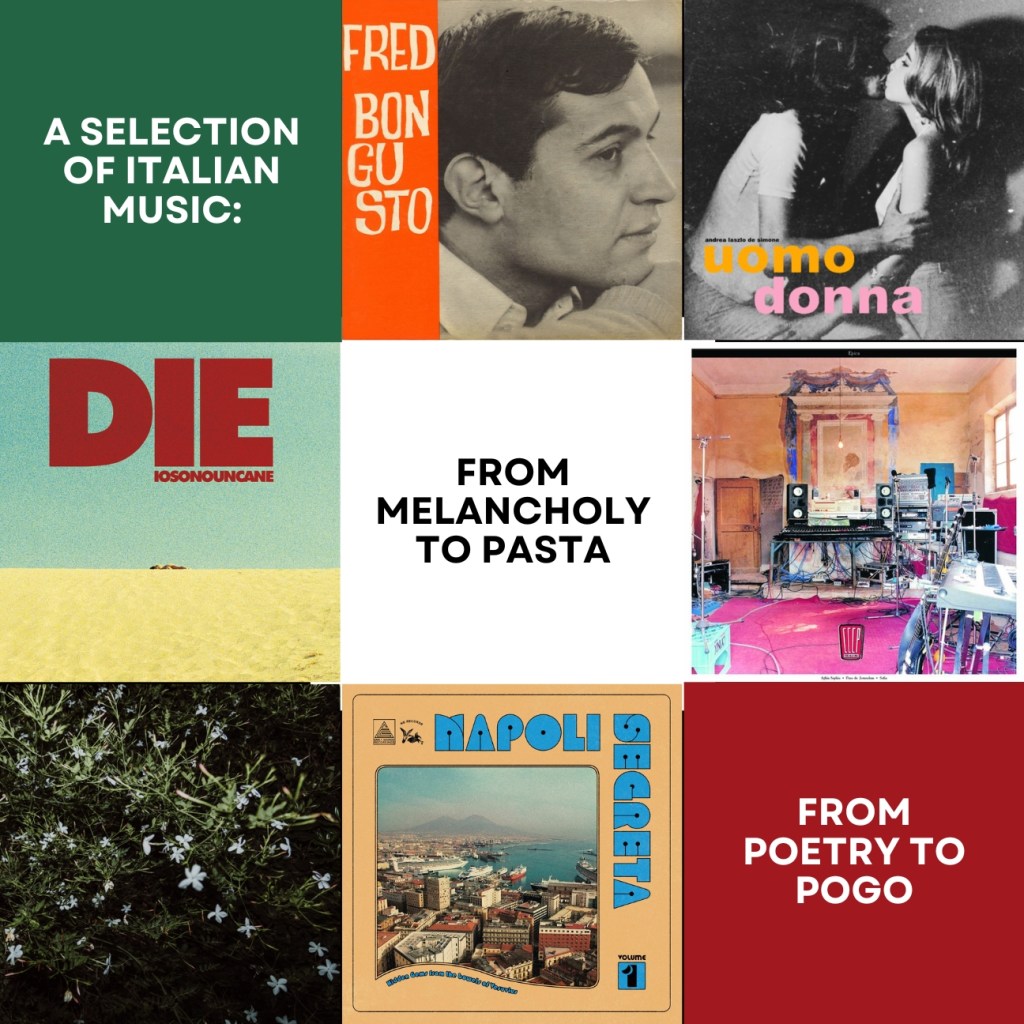
Fred Bongusto, whose real name is Alfredo Antonio Carlo Buongusto, made a significant mark with his self-titled album released in 1963. This album became a milestone in his career, making him famous for romantic ballads and elegant arrangements. Tracks like “Amore Fermati” and “Doce Doce” reflect Bongusto’s emotional delivery and his contributions to Italian light music. The album is enriched with influences from jazz and Latin music, offering listeners a nostalgic and romantic atmosphere.
Andrea Laszlo De Simone is a singer known for his striking cinematic and lyrical approach to contemporary Italian music. In 2017, he released the album Uomo Donna through 42 Records, produced with sound engineer Giuseppe Lo Bue. This album offers a cinematic narrative of moments from the artist’s life, creating unique ballads and elegant arrangements.
Iosonouncane, whose real name is Jacopo Incani, is one of the most important figures in Italy’s modern experimental music scene. In the 2010s, he gained attention with innovative albums blending folk and electronic elements. As a singer and a storyteller, Iosonouncane enhances emotional expression by using sound elements in novel ways. Stormi explores the inner turmoil of an individual, creating an abstract and intense atmosphere with minimalist melodies and layered vocals that reflect the complexities of the human experience.
CCCP is an Italian punk/post-punk band formed in 1982, heavily influenced by Soviet aesthetics and political engagement, leading the alternative music scene in 1980s Italy. The band’s name, along with the phrase Fedeli alla Linea (Faithful to the Party Line), symbolizes their strong anti-capitalist stance. CCCP redefined the Italian punk scene by combining the political dimension of European punk culture with theatrical performances. Annarella marks a period where the band moved away from their hardcore punk roots to explore a more melancholic and minimalist direction. This transformation was a huge surprise for fans and presents the exhaustion and emotional void that love can bring.
Marco Castello is a contemporary Italian musician who blends jazz and pop elements to create an enthralling auditory experience. He is particularly known for his innovative approach in merging traditional Italian melodies with modern pop components, resulting in a unique sound that seamlessly combines local flavors with contemporary arrangements. The depth of his compositions evokes a nostalgic yet modern musical experience for listeners, inviting them to explore the intricate layers of his work.
Founded in the 1960s, I Giganti represents the rise of beat music in the Italian pop-rock scene, a pivotal movement that not only transformed the musical landscape but also resonated deeply with the social dynamics of the era. The Beat movement made a huge impact, particularly among younger generations eager to express their identities and aspirations through music. Known for their influence on Italian rock and pop, their song Una Ragazza in Due reflects the youthful energy and societal changes of the time, capturing the spirit of a young love story set against the backdrop of the noisy streets of the city. Through catchy melodies and vibrant instrumentation, the band encapsulated the feelings of hope and rebellion that characterized the youth culture of the 1960s, allowing listeners to connect emotionally with their experiences of love, freedom, and the quest for individuality, marking a significant chapter in the evolution of Italian popular music.
Donatella Viggiano is an artist who preserves and modernizes Naples’ musical heritage. Naples’ songs are a cornerstone of Italian folk music, and Viggiano blends this tradition with contemporary approaches, reaching younger generations. The song Napule Canta E More strikingly conveys the rich cultural heritage and emotional depth of Naples, bridging the city’s joy and sadness.
Nada emerged as a young talent when she participated in the 1969 Eurovision Song Contest and became one of the icons of Italian pop. Throughout her career, she explored different genres. Ma Che Freddo Fa is a significant piece that reflects the generational differences and emotional transitions in Italian pop music. Nada’s impressive stage presence and vocal talent have made this song one of the era’s classics. Her powerful vocals and simple yet effective arrangements make it unforgettable.
Ufomammut, a doom metal band formed in Italy in 1999, is known for its long tracks, heavy riffs, droning vocals, and the use of sound effects and synths. Their music combines doom metal, stoner rock, sludge metal, and drone metal. Godlike Snake takes listeners on a deep musical journey, with heavy riffs and atmospheric soundscapes. Tracks like “Satan” and “Snake” showcase the band’s unique style and experimental approach.
We conclude with one of the brightest names in the 1960s Italian pop scene, Caterina Caselli. Both a singer and a successful music producer, Caselli served as a bridge to localize Western popular hits in Italian, bringing international melodies to the ears of her fellow countrymen in a uniquely relatable way. Her music reflects both originality and universality, capable of resonating with diverse audiences. Tutto Nero, an Italian rendition of the famous Paint It Black, deals with dark emotions and loss from an Italian perspective, making it a remarkable adaptation of the original.
